
You don’t get access to Steph Curry, Jimmy Butler, or a WNBA team’s practice facility by accident. You get it because you’ve shown brands and leagues you can move fast, handle a set with 40 crew members and 30 client partners, and still walk away with something that actually tells a story — not just a highlight reel with a logo slapped on it.
That’s the kind of work we do in sports. Brand campaigns, athlete features, docu-style interviews — all shot around the demands real athletes and real teams actually have: tight windows, tighter access, and zero room for a crew that doesn’t know what it’s doing.
Here’s some of that work.

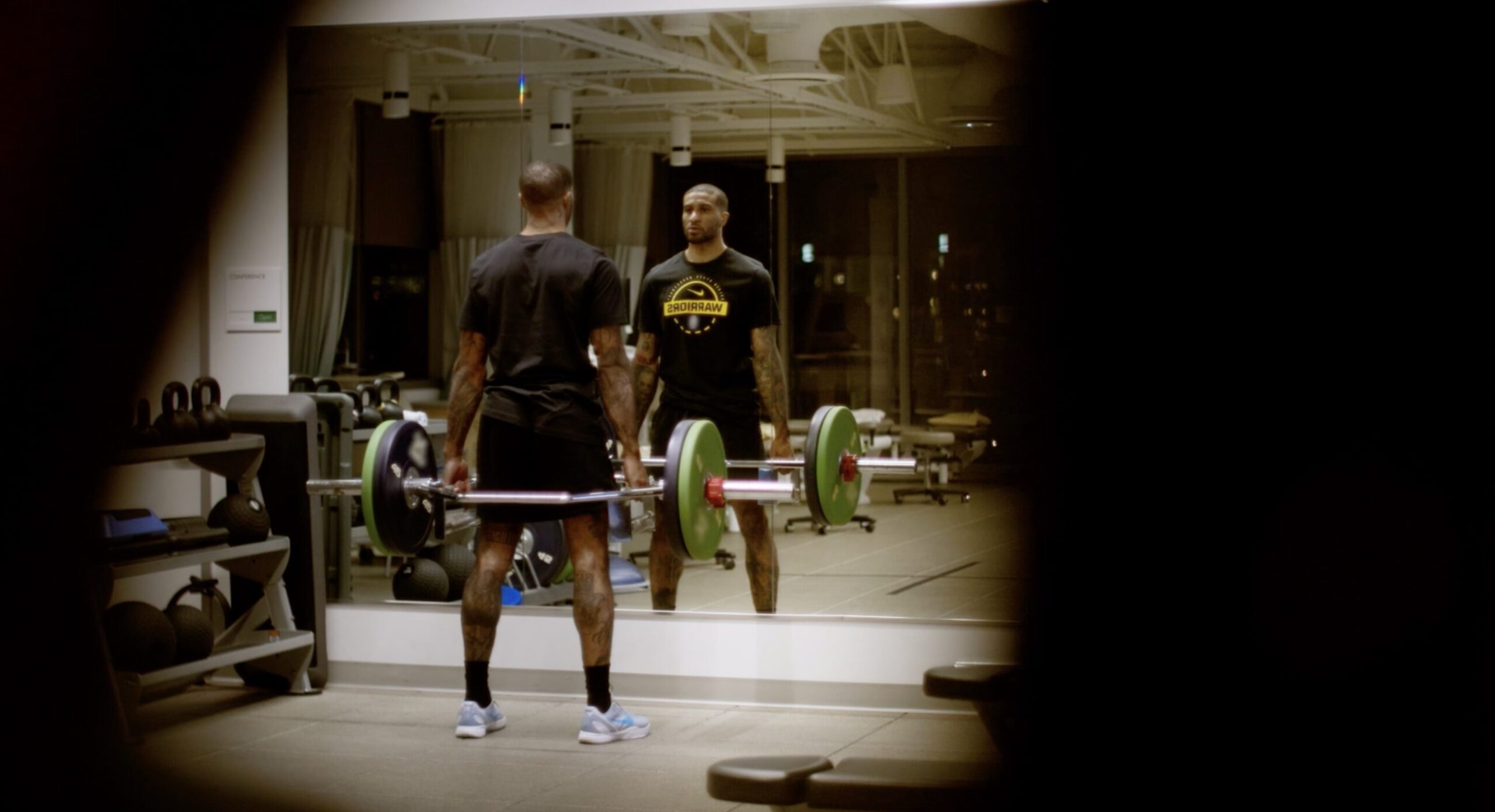
Sports Illustrated partnered with Kaiser Permanente on a branded content series spotlighting Kaiser’s team partnerships across Northern California — pairing a Kaiser Permanente physician with an athlete from each partner team to explore how elite performance and whole-person healthcare intersect. The series has featured athletes including Macklin Celebrini, Gary Payton II, and Tiffany Hayes.
We produced the episode centered on the Golden State Valkyries, featuring guard Tiffany Hayes and Dr. Mary Moore, the Valkyries’ team physician. The story followed Tiffany through her daily rhythm and mental preparation, then paired her with Dr. Moore to unpack how Kaiser’s care model — physical and mental health treated as one system, not two — shows up in the day-to-day of a professional athlete.
What we shot:
This is the kind of production where the schedule is measured in minutes, not hours — hard outs on locations, athlete call times built around game and training schedules, wardrobe and hair/makeup coordinated on the move between sites. We built the shoot day around those constraints without losing the intimacy the interview format depends on.


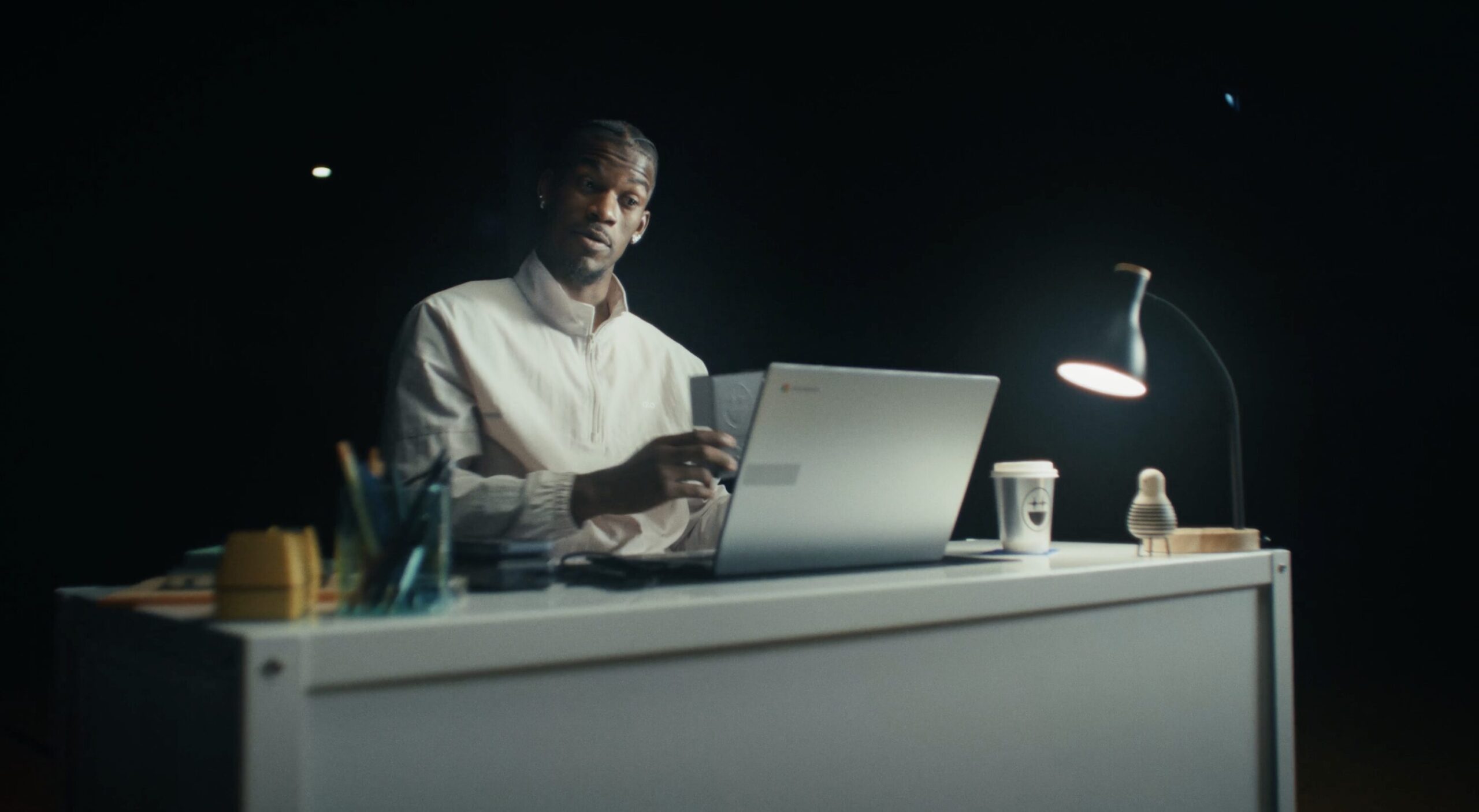
The goal: Denvix wanted to connect its energy product line to Jimmy Butler’s own reputation for endurance and versatility — positioning the brand as the fuel behind sustained performance, on the court and off.
What we did: Our team led creative development and scriptwriting, building a concept that tied Jimmy’s multifaceted lifestyle to the adaptability of the Denvix product line. We shot at the historic Kezar Pavilion in San Francisco across four distinct setups — a basketball court, an office, a workout room, and a photoshoot backdrop — delivering one 30–45 second hero spot and a 15-second cutdown. From greenlight to shoot day, we had less than two weeks to develop the creative and execute pre-production.

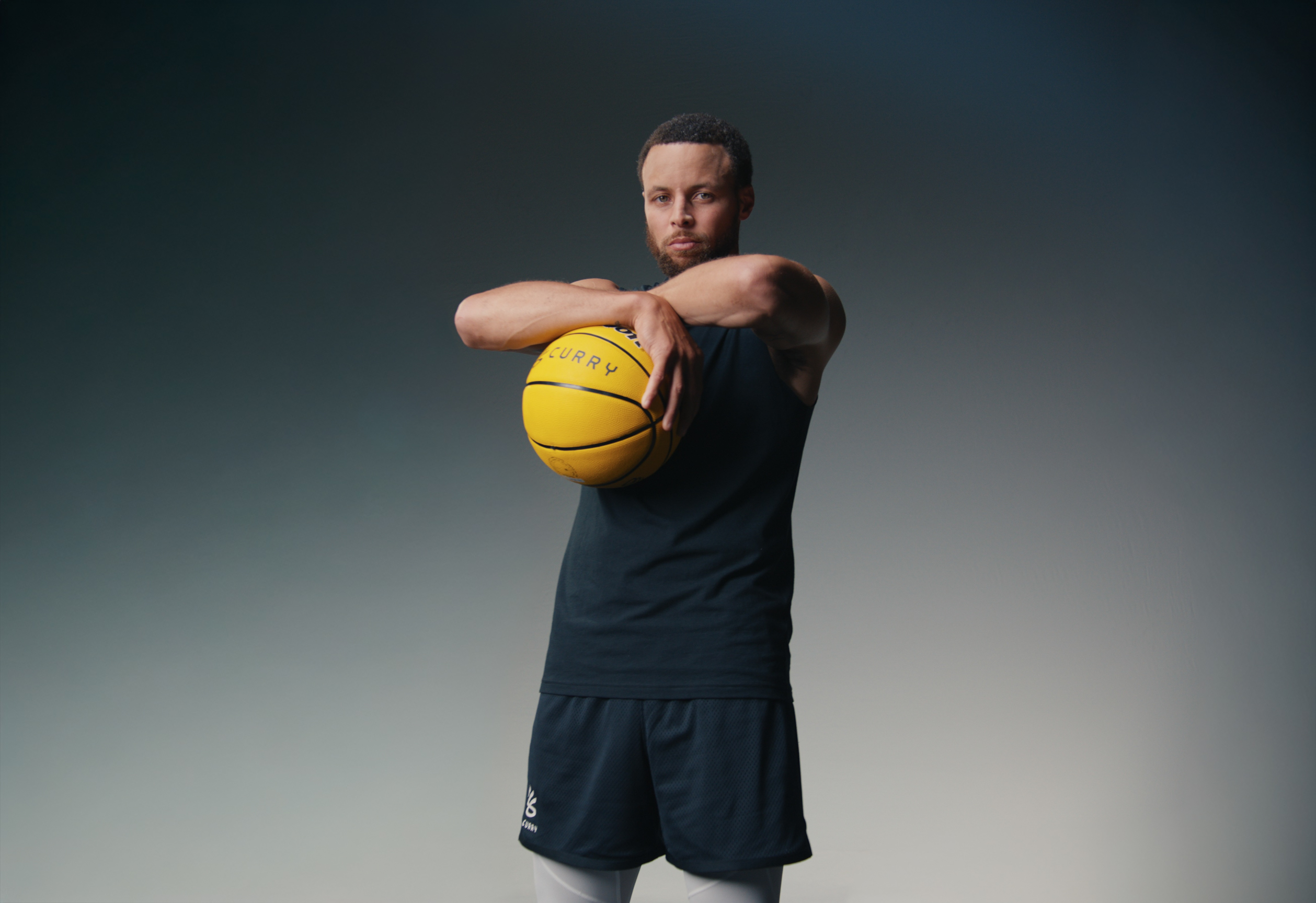
The goal: Curry Brand came to us with a strong creative vision already in place for the Curry Series 7 shoe launch, featuring Stephen Curry and Quincy Olivari. Our job was to refine it, expand it, and build the world around it — one that could carry the shoe’s speed, bounce, and futuristic tech story.
What we did: With two weeks of prep, we aligned creative direction, logistics, and technical needs ahead of a pre-light day and a single fast-moving shoot day capturing motion, stills, interviews, and social content simultaneously. Our art department built multiple custom environments on a tight turnaround — a massive white seamless backdrop, a rotating basketball platform, a glossy black plexiglass set, and an elevated transparent floor for under-foot shots. Nearly 40 crew members and 30 client partners worked in sync on set.
We delivered four final pieces blending ARRI Alexa footage, 16mm film, and photography.
Every one of these had the same underlying challenge: real athletes, real schedules, and almost no margin for error. That’s not a special case for us — it’s the baseline we build every sports shoot around.
Practice windows, game-day call times, facility access — we build the shoot day to fit inside them, down to the fifteen-minute block.
Two weeks from concept to camera has been the norm, not the exception, on more than one of these projects.
Whether it's a two-person interview crew or a 40-person set with custom-built environments, the production quality holds.
Even inside a brand mandate, we build in an arc — because that's what makes people actually watch to the end.


If you’ve got an athlete, a team partnership, or a sports brand campaign you’re trying to bring to life in the Bay Area, let’s talk about what it’ll take to make it happen.
It depends heavily on talent access, number of locations, and crew size — a two-person interview shoot and a 40-person set build with custom environments are very different budgets. As a range, our sports and athlete projects have run from focused single-location interview pieces up through full commercial productions with multiple builds and a full crew. Check our pricing page for category-level budget ranges, or reach out with your scope and we’ll give you a real number, not a placeholder.
As little as two weeks, if that’s what you’ve got. Two of the projects above went from creative concept to camera in under two weeks. That said, tight timelines mean less flexibility if something shifts — the more lead time you can give us, especially around athlete availability, the more room we have to problem-solve if a schedule changes.
Yes — this is most of the coordination work on any athlete shoot. We build the production schedule around the athlete’s actual availability, not the other way around, down to specific call times, hard outs on locations, and moving hair/makeup or wardrobe changes into transit time when needed.
Either. We’ve shot at team practice facilities, private training gyms, and standalone studio locations depending on what the brand or team can secure access to. If you don’t have a location locked yet, we can help scout options in the Bay Area that fit the look you’re after.
Both. Sometimes we’re brought on directly by the brand for creative development and scriptwriting from scratch; other times we’re executing a concept an agency or rights holder has already built out, like a Sports Illustrated-produced series. Either way, we plan production the same way.
Ownership and delivery terms are set per project and outlined in our production agreement — this varies depending on whether talent, a league, or a brand has specific rights requirements attached. Raw file delivery is something we can build into the scope; just flag it upfront so we plan storage and delivery accordingly.
Depends on the deliverable count and how many rounds of client review are built in. A single hero video with one cutdown moves faster than a multi-episode series with a formal sign-off process across multiple stakeholders. We’ll lay out a realistic post-production timeline before the shoot, not after.
Yes. Athlete shoots almost always come with specific guidelines — approved wardrobe, no unauthorized logos, restrictions on jewelry or reflective items, usage windows. We build those into pre-production so nothing gets discovered on set.
San Francisco Video Production Company | San Francisco Film Production | Promo Videos| Kickstarter Videos | Music Videos | Narrative Films | Commercial video agency | Video studio | Filmmaking team | Conference videos | Bay area video production |Crowd funding video | Video producer | Video Editor | Videographer | Film Studio |Video crew.
