
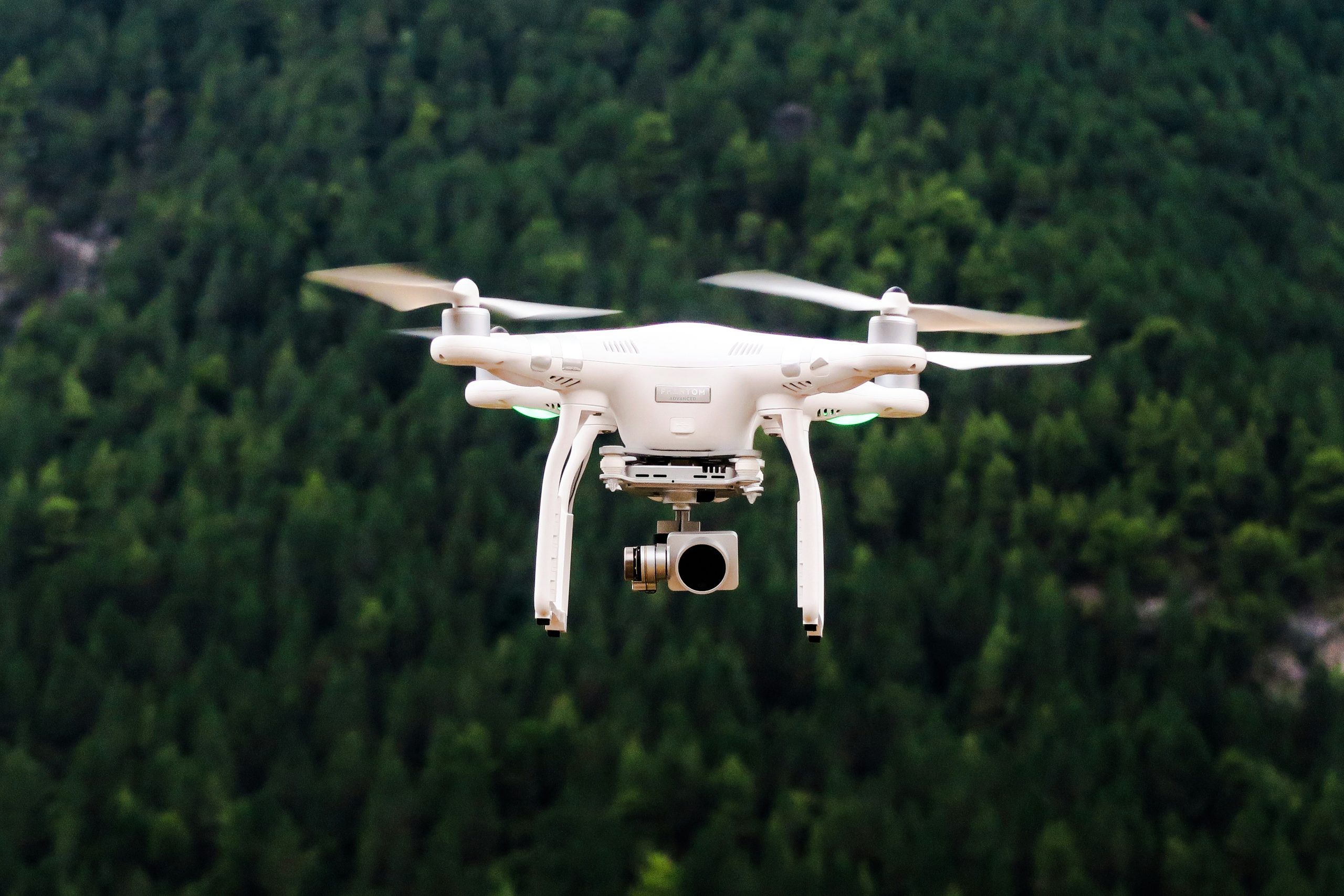
Drones are changing the game in video production, offering breathtaking shots and creative possibilities at a fraction of the cost.

Drones are machines with video and photo (no audio) capability that can be utilized for commercials, movies, television shows, news reels/reports, photography, real-estate photography. Drones provide less physical constraints than camera cranes, steadicams, camera tracks etc. allowing the filmmaker or photographer more creativity with their shots. There are even ND filters for drone lenses which allow for some control over the lighting (if you were wondering about this).
Drones have offered photographers and filmmakers so many more possibilities to be creative and captivate an audience through images. Instead of spending a lot of money on renting a helicopter or crane, getting the same shots and with the same high quality can be done at a fraction of the cost.
Using a drone in your video production can impact your storytelling, depending on how you choose to use it. While any drone footage tends to look amazing, it’s best to maximize the utilitarian nature of this tool and push creative boundaries to have an even bigger impact on viewers. It takes a skilled drone professional to effectively execute complicated camera moves, so be sure to look at drone operators’ reels before hiring them.

From capturing stunning aerial views to adding drama and depth to your story, drones can take your video production to new heights—as long as you know the rules of the sky.
Aerial shots can help establish your location, the scale of something, transition between locations, capture new perspectives, track/follow a subject (quickly or not), and film in a more confined space than a helicopter can. Drones can also be used to heighten drama, and help shape the overall tone of a video. Here is an example of a few drone shots and why you might want to use them.
No drone videography should be considered or done without knowledge of what you’re legally able to do. To find out where any restricted airspace is, what the altitude limit is, or legal proximity to buildings, be sure to look this up before shooting. All information about FAA rules and regulations can be found online or on specific apps, such as AirMap or B4UFLY. Most drones are able to fly three to five miles, for between fifteen to thirty minutes (per battery).
If the rules and regulations are too intimidating, don’t hesitate to reach out to us in order to better understand where you can and can’t shoot, and what kind of shots are specifically possible in that given area.


